
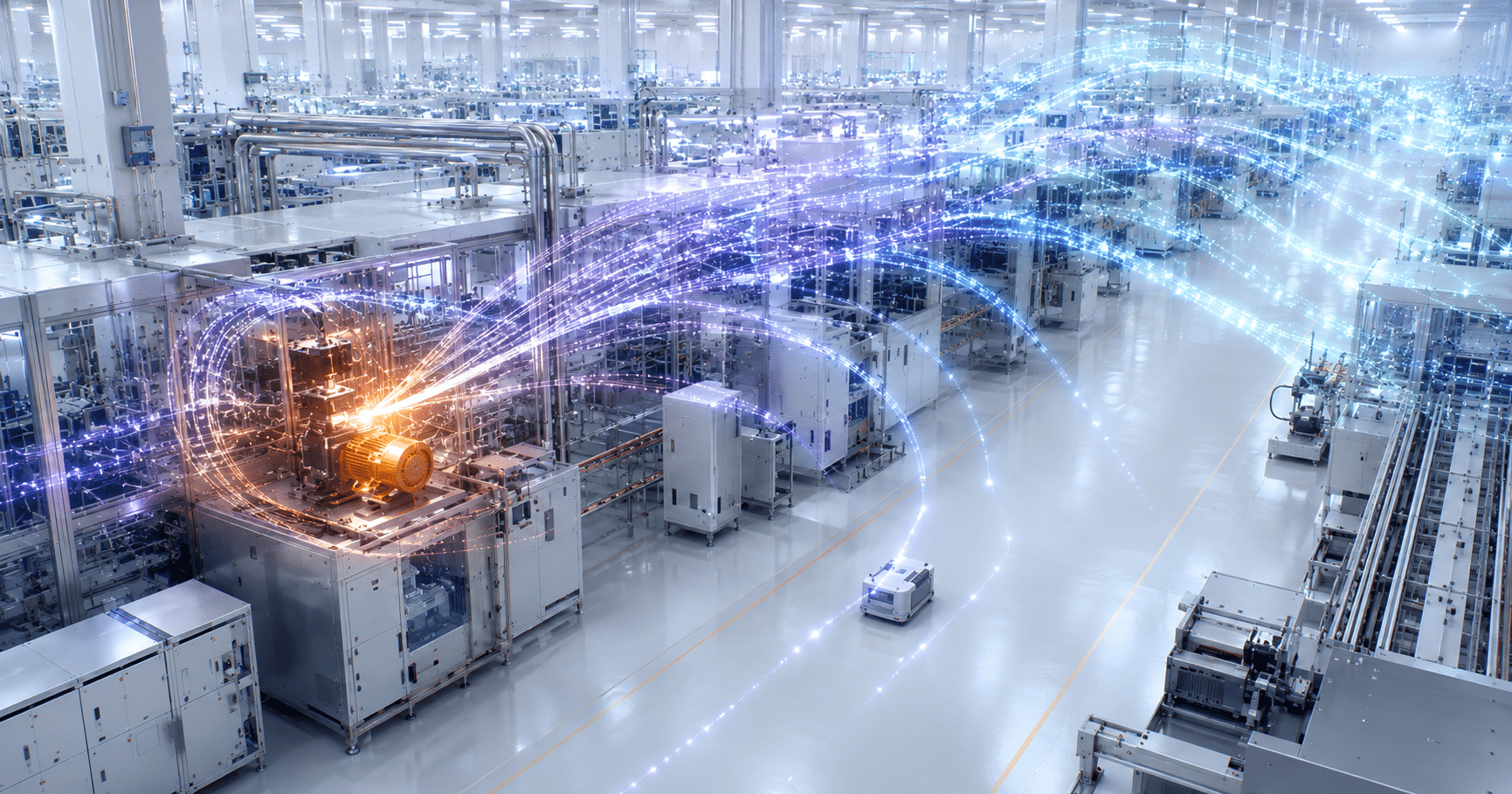
At 10:42 a.m., a condition-monitoring sensor detects an abnormal thermal signature in a motor on Line 4.
The signal is accurate. The temperature is rising. The equipment may be heading toward failure.
The AI has seen the event.
Manufacturing AI context determines whether a system simply detects an event—or understands what that event could mean across the operation.
For manufacturing AI, the harder question is how much of the operation it can see around it.
Can it identify what the motor powers? Which production orders depend on that line? Whether a replacement part is available? Who is qualified to perform the repair? Or which customer commitment could be affected if the line stops?
Detection tells a team that something has changed. The value of manufacturing AI depends on whether it can understand what that change means.
The distance between a signal and its impact
A sensor reading begins at one point in the plant, but its consequences rarely stay there.
The Line 4 motor belongs to an asset. That asset supports a process connected to a production schedule, material flow, maintenance plan, and customer order.
A developing failure may therefore affect far more than equipment health.
It could change when maintenance should intervene. It could require a technician with a particular certification. It could consume a spare part reserved for another line. It could delay one order while leaving another unaffected—or put a delivery commitment at risk.
The event travels through the operation even when the data does not.
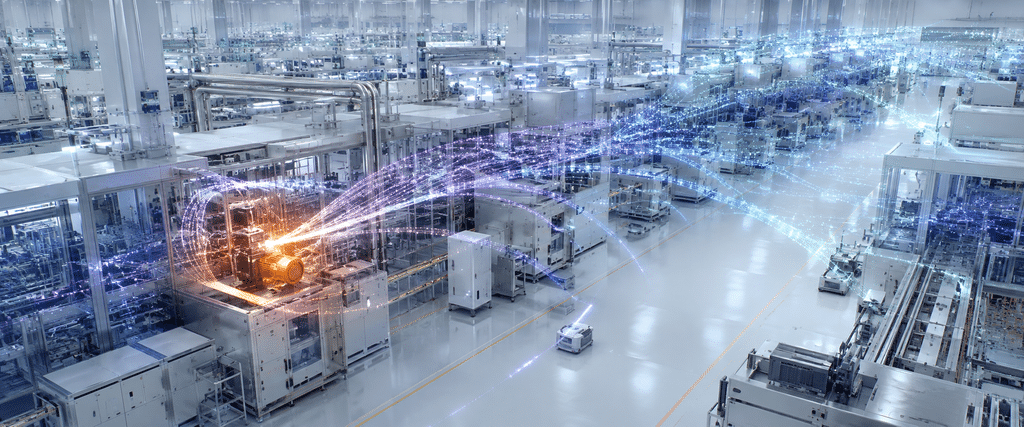
Once the alert appears, different teams begin reconstructing the situation from their own systems.
A reliability engineer verifies whether the signal represents a real equipment condition. Maintenance searches the asset history and checks for an available replacement. Production examines the schedule. Planning reviews the orders in the queue.
Each team may hold a valid piece of the answer. The challenge is turning those pieces into one coordinated decision before the condition becomes downtime.
The questions behind every equipment alert
Most plants already have the information needed to respond. It may exist across the historian, CMMS, MES, ERP, inventory systems, operator notes, and engineering records.
The more important question is whether manufacturing AI understands how those records relate to the same physical operation.
For the Line 4 event, can the AI answer:
- What role does this motor play in production?
- Which equipment, orders, and schedules depend on it?
- Which people, parts, and procedures are available?
- What operational commitments could be affected?
- Why is one response preferable to another?
When those relationships are missing, every alert begins a new manual investigation.
Connected data is the beginning
Making information accessible across systems is an important step, but access alone does not give AI operational understanding.
A collection of records does not automatically explain that an equipment tag in a historian, an asset ID in a maintenance system, and a motor referenced in an operator note all describe the same physical asset.
It also does not explain which line that asset supports or what happens downstream if it fails.
Manufacturing AI needs a shared understanding of the plant: its assets, processes, people, resources, and business commitments—and the relationships between them.
This is where industrial ontology becomes important.
Ontology gives AI the connected structure required to interpret what each piece of information represents and how it relates to the wider operation.
The question is no longer only:
“Is this motor behaving abnormally?”
It becomes:
“What does this condition mean for the operation?”
Why Manufacturing AI Context Matters Beyond Detection
Early detection creates valuable time, but only when the organization can use that time effectively.
The alert must become a diagnosis. The diagnosis must lead to a feasible response. That response must account for production priorities and the outcomes the business needs to protect.
Each step requires a wider view of the plant.
This creates a useful test for any manufacturing AI initiative:
How far can the AI follow the consequence of a single event?
Does its understanding end at the sensor? At the asset? At the production line?
Or can it connect what is happening on the plant floor to the decisions being made across the operation?
The complete Motor X scenario reveals what changes when manufacturing AI can follow those relationships—and how one event can create very different outcomes depending on the context available.
Follow the complete Line 4 scenario
In our whitepaper, Context Is Everything, we trace the Motor X event beyond the initial thermal signal to explore:
- The context manufacturing AI needs beyond detection
- How industrial ontology connects operational relationships
- How one event affects decisions across the plant and business
- What changes when AI can understand the full impact chain